
5 min read
Blackout vs light filtering vs screen shades
Pick by what the room is for — sleep, soft daylight, or a view — then check how it behaves at night with the lights on.
The short version
Blackout fabric lets no light through. Light-filtering fabric lets light in but turns whatever is on the other side into a shadow. Screen fabric has real open holes in the weave, so you can see through it and recognise what is on the other side.
The rule that explains most surprises: whoever is on the darker side sees through to the brighter side. In the daytime that is you looking out. At night, with your lights on, it is the street looking in.
Blackout and room darkening
No light comes through the fabric itself — the darkest choice, and complete privacy day and night. The catch is that it only blocks light where it covers: an inside-mounted shade leaves a thin gap at each side where light slips in.
For the darkest room, make it wider than the window. An outside mount that overlaps the frame by 2 inches or more on each side, or a cassette with side channels where offered, closes most of those gaps. Roman shades and drapery get the same effect from a blackout lining.
- Bedrooms, nurseries, media rooms
- Shift workers and light sleepers
- Order wider than the opening for the best coverage
Light filtering
Light-filtering fabric brings plenty of light in and takes the glare away, but you do not get a clear picture of anything on the other side — a shadow at most. How pronounced that shadow is depends on how bright it is on each side and how close the person or object is to the shade.
In the daytime, with the brighter side outdoors, people outside see only bright fabric. At night, with the lights on inside, it reverses: people and things close to the shade can show from outside as silhouettes.
- Living rooms, kitchens, bathrooms, offices
- Rooms you want to stay bright
- Daytime privacy; shadows can show at night
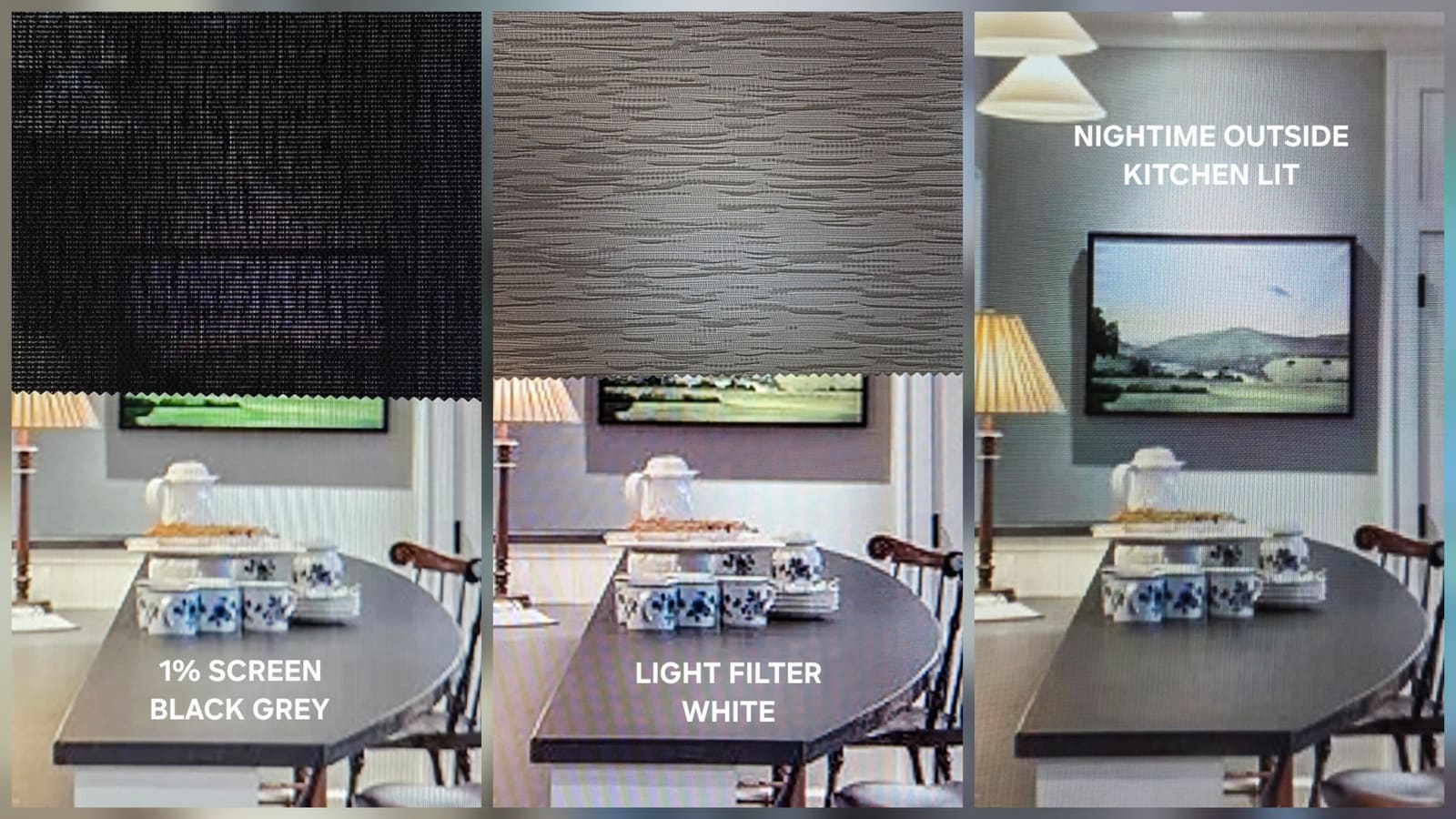
Screen (solar) shades and openness %
Screen fabric is woven with real holes, and the percentage — 1%, 3%, 5% — is how much of the fabric is open. A lower percentage lets in less light and glare and gives more privacy; a higher one gives a brighter room and a clearer view out. With most screens you can see and identify what is on the other side.
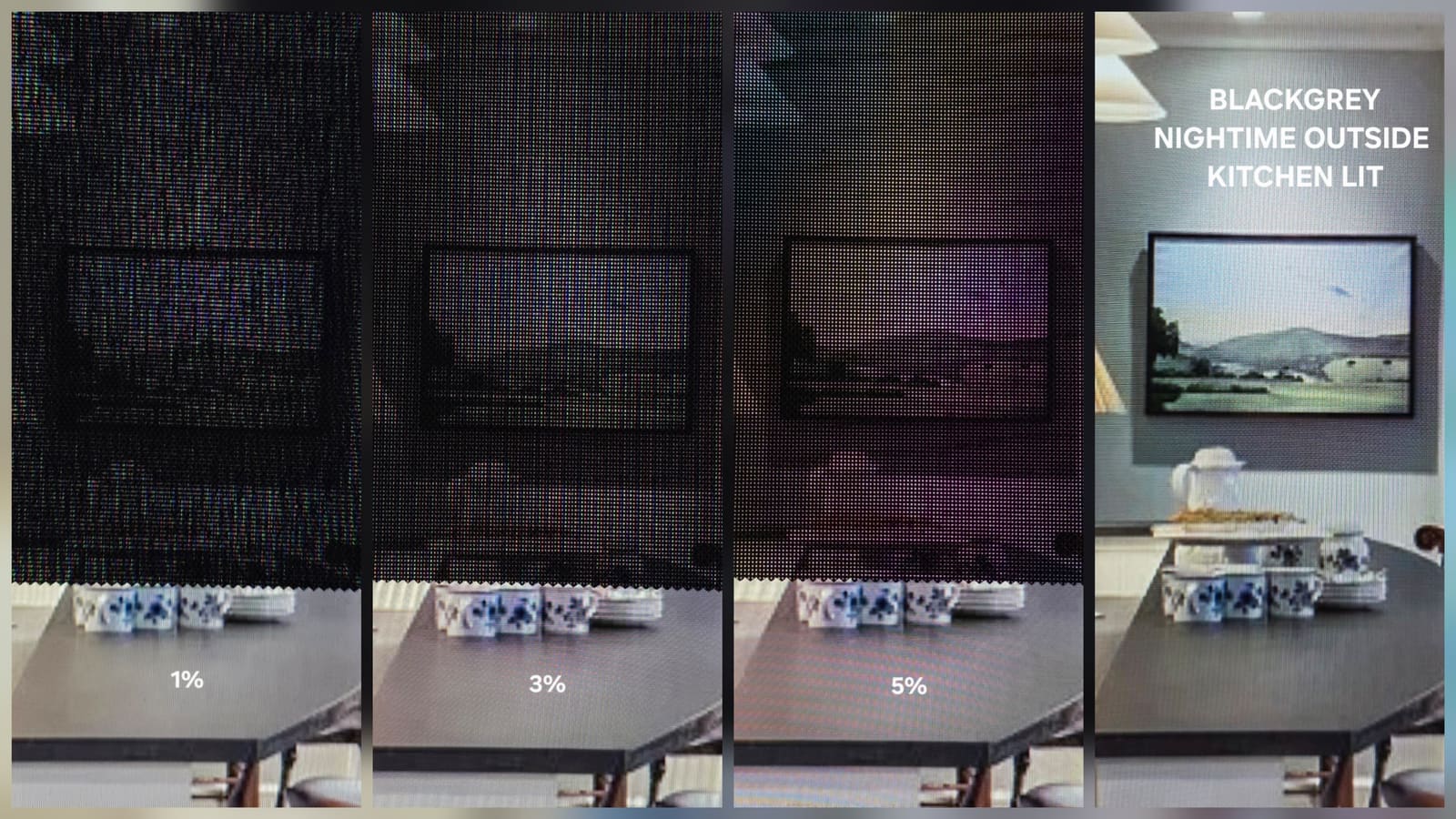
Because you can see through it, the darker-side rule matters most here. By day you keep your view out while people outside mostly see the fabric. At night, with lights on inside, your room shows through — more clearly at 5% than at 1%. If you need night privacy, pair the screen with a light-filtering or blackout shade.
- 1% — most privacy and glare control, dimmest view
- 3% — the balance most people pick
- 5% — brightest room, clearest view
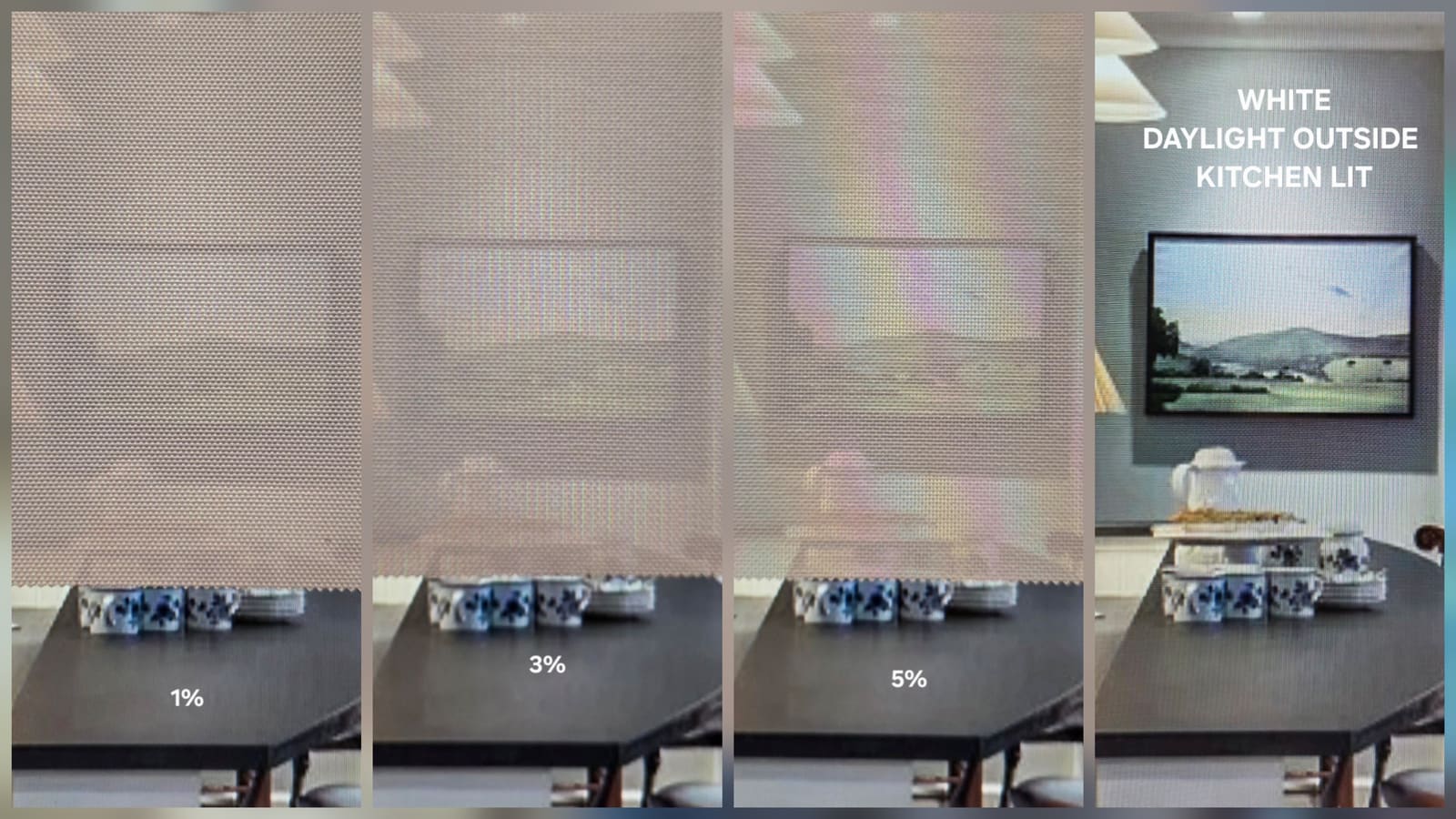
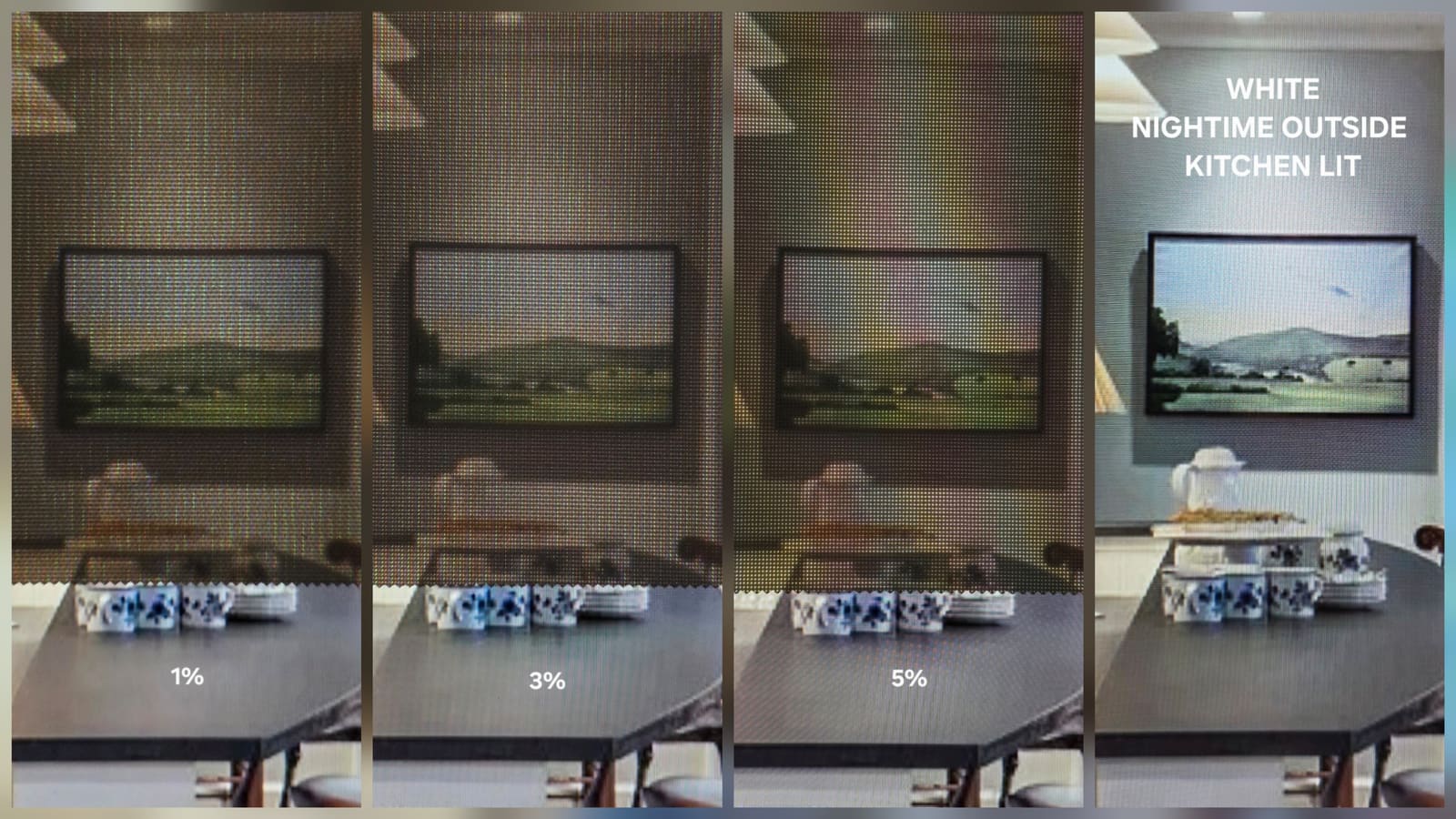
Privacy lining — the middle option
Roman shades and drapery also offer a privacy lining: it filters light more than an unlined panel and gives privacy day and night without the full darkness of blackout. Choose it for living spaces where you sometimes want the room dim but not dark.
Color changes it too
Color changes how a fabric behaves, not just how it looks. Lighter colors glow and fill the room with light; darker colors cut glare and keep the room dimmer. Compare the white and black-grey photos at the same openness — and order free swatches to try yours in the window.
The photos below are the same 1%, 3% and 5% screens in black grey. At night the black-grey 1% hides the room better than the white 1% does; by day both read as a surface rather than a window.
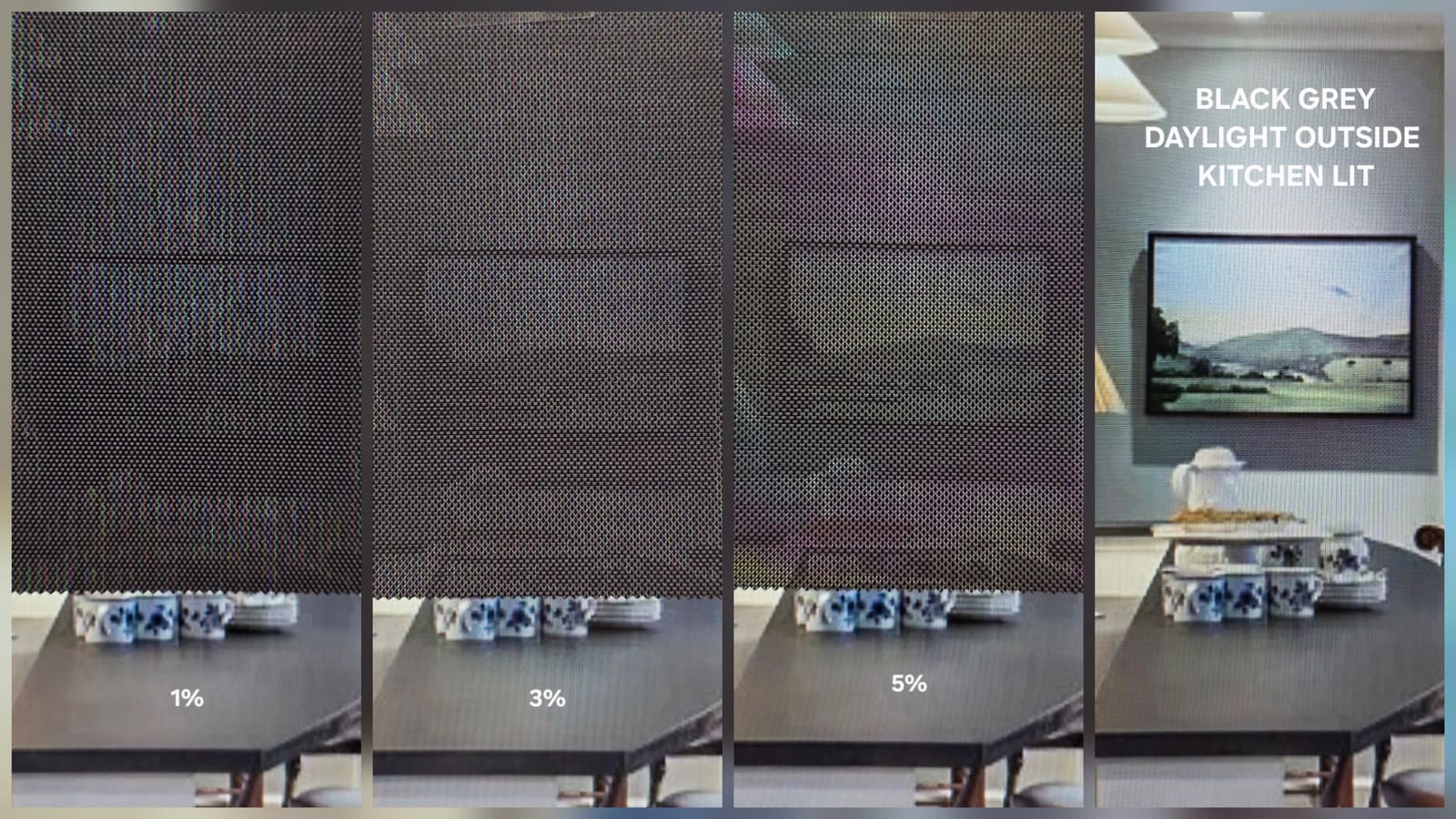
Hold the fabric first
Screens on a website flatter fabric. Order free swatches, hold one against the window at midday and again at night with the lights on, and you will know in a minute which one the room needs.


